By Richard Clements
Some places have a way of sitting just off to the side of ordinary life. You feel them before you get around to naming the feeling. The old Latin word līmen once meant nothing more than a threshold, the small step between one spot and the next. Over time the idea stretched well beyond the doorway and came to describe those moments when you sense you’re between states rather than firmly settled in either one.
Most people know that feeling from life itself. The slow drift out of youth, for instance, when childhood has slipped away but adulthood hasn’t quite taken shape. Or the days after a loss, when life continues around you but you move slightly beside it rather than inside it.
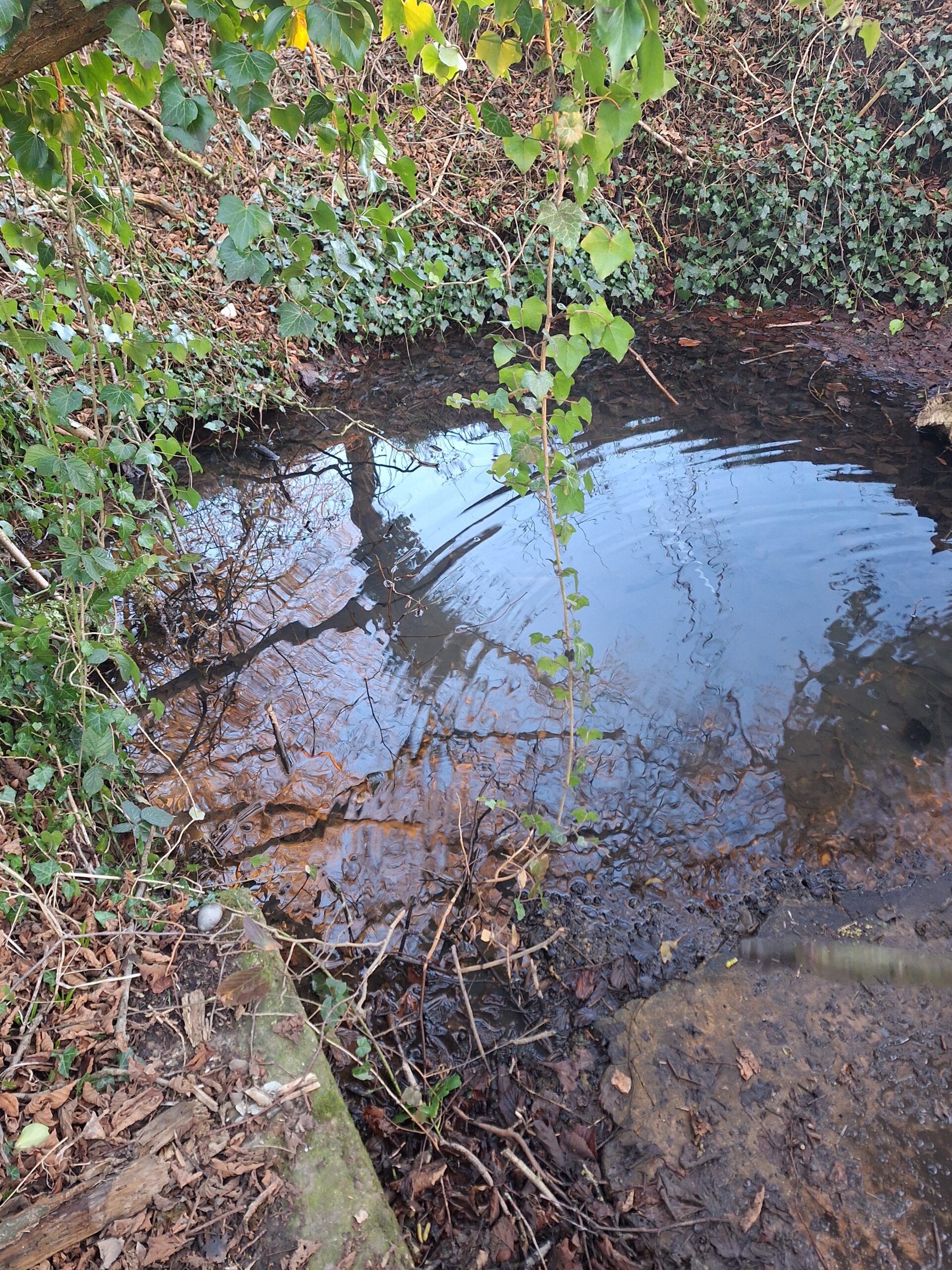
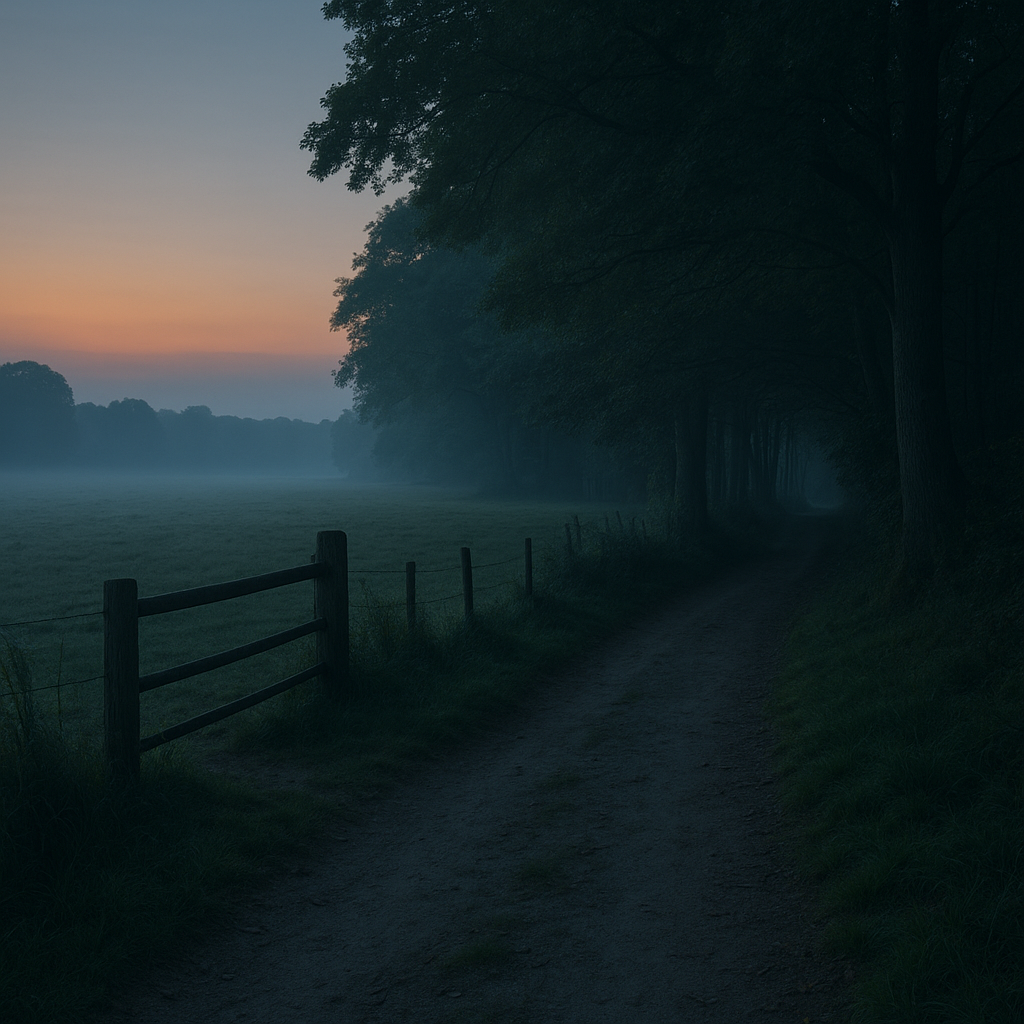
The landscape carries the same mood in certain places. At the edge of a wood the light changes in a way that gently pulls at your attention. The same thing can happen where one field softens into another, almost without noticing, or along the narrow band where the land begins to give way to the sea. These spots often feel different, as though the ordinary world thins a little.
The Academic Foundation
In the early twentieth century, the scholar Arnold van Gennep began comparing how different peoples guide a person through major changes in life. In his book The Rites of Passage (1909), he saw a similar shape appearing everywhere he looked. Someone steps away from what they once were, then spends time in a loose and uncertain middle phase, and only later settles into whatever comes next. It was that middle ground that interested him most.
The anthropologist Victor Turner later expanded on these ideas. He paid close attention to what happens when people share this unsettled space. Turner noticed that groups often develop a brief, unexpected closeness, something he called communitas. People who might normally stand apart in terms of status or circumstance can feel unusually level with one another when they inhabit the same in-between moment.
Although both men were describing human experience, their ideas echo the strange mood found in many places across the landscape.
Physical Spaces as Spiritual Divides
Ancient Pathways and Boundary Lines
Some of the oldest liminal places are the paths worn into the land by generations long gone. Trackways that follow ridges or old parish boundaries often carry a curious atmosphere. The air can shift around you, sometimes turning sharp, sometimes soft, and the land seems to pause for a moment. It isn’t hard to imagine earlier travellers brushing past the same ground long before you came along.
Boundaries themselves have always mattered. In earlier times, crossing the edge of a territory could mean stepping into a place with unfamiliar rules or risks. Old stories often describe borders as places where the world bends slightly, encouraging a person to tread with just a little more care.
Crossroads and Meeting Places
Crossroads appear again and again in older stories, not because of modern ideas of roads, but because they symbolise uncertainty. In the ancient Mediterranean world, travellers believed Hecate stood watch at three-way junctions. English folklore often sets a darker mood, imagining crossroads as spots where wandering spirits gathered or where something less welcome might linger. Suicides were once buried at crossroads, the tangle of paths thought to confuse troubled souls.
Their power lies in the feeling of standing where several directions, and several possibilities, meet at once.
The Tide Line
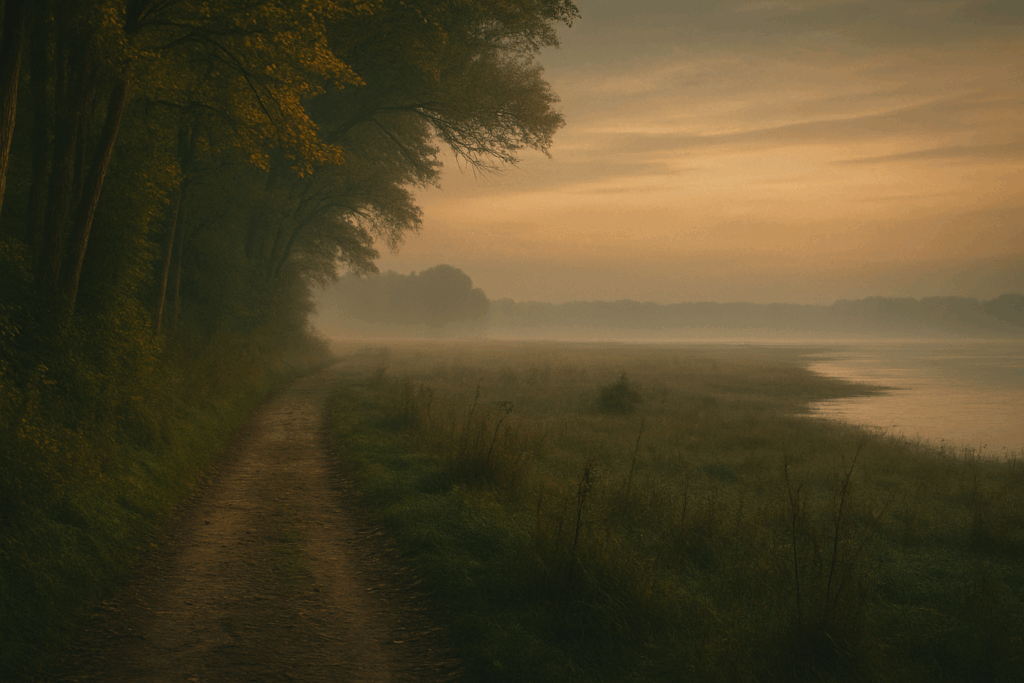
The shifting border where land meets the sea is one of the clearest natural thresholds. It never stays still. Each tide wipes away the marks of the last and draws its own line across the shore. People living near the coast have long treated this place with a mixture of respect and caution. Some once left small offerings on the sand for spirits of the water. Tales of sudden fogs, strange lights, wrecks and vanishing paths have circulated along coastlines for generations.
Twice a day the sea reshapes the edge of the land. With a border that restless, it is little surprise that so many stories begin or end at the water’s edge.
Where Elements Meet
Other edges of the landscape carry the same atmosphere. The line where a woodland begins can shift a person’s sense of things. Step a few paces inside and the world tilts: the light dips or brightens, the sound changes its tone, and time seems to take on a different rhythm.
Places like these draw their strength from contrast. Light meets shadow. Cultivated land leans into wilder ground. Water presses against firm soil. They exist between one thing and another, and that in-between quality gives them their pull.
Doorways and Thresholds
Some of the most familiar liminal spaces are the ones we barely think about. A doorway marks the place where the outside world pauses and the private one begins. People once crossed thresholds with more intention than we usually do now, lifting a foot slightly or pausing for a moment before stepping through.
These small gestures came from the belief that the step itself mattered. For a heartbeat you are neither inside nor outside.
Staircases
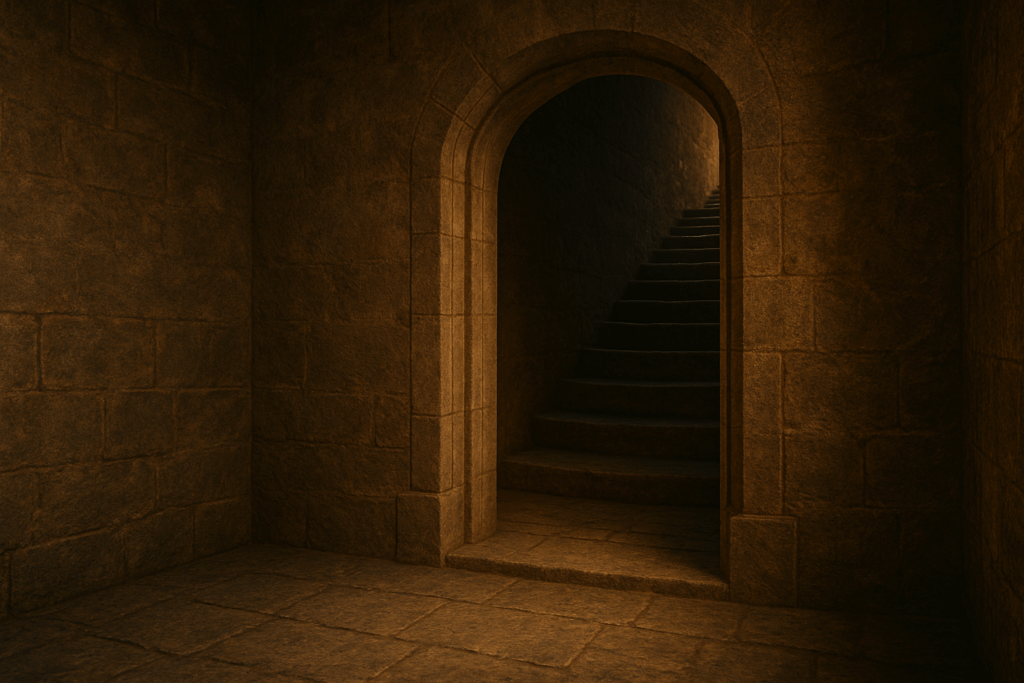
Staircases create another kind of transition. They move you upward or downward, and while you are on the steps you never fully belong to either level. They are made for passing through, not for staying.
Old buildings often amplify this effect. Castles, monasteries and large houses have gathered stories about faint footsteps, sudden draughts or the prickling sense of being watched along their stairways. Taken literally or not, the idea behind them is simple. A staircase belongs to movement, and movement has a way of unsettling the imagination.
The Guardians of the Gate
Because liminal spaces were once seen as fragile points in the structure of life, people often tried to protect them. The threshold of a home, especially, was treated with care. Something unwelcome might slip in at the edges.
Concealed Objects
One of the most striking protective customs involved hiding objects within the walls, floors or chimney spaces of houses. Witch bottles, packed with pins, nails and bits of personal material, were tucked under hearths or placed near doorways in the belief that harmful intent would catch there. Archaeologists have also found dried cats inside walls, horse skulls beneath floorboards and coins slipped beneath thresholds. Each was a small attempt to guard the boundary between home and the wider world.
Modern Liminality
These places never disappeared; they simply changed shape. Airports hold people in a strange middle ground, not quite gone and not yet arrived. Late-night platforms, empty service stations and long hospital corridors produce the same drifting sensation where the familiar world seems to sit slightly to one side.
Digital life has added its own versions. A blank loading screen, a silent chat window, an online lobby waiting for someone to appear. All are small pauses that echo older forms of waiting.
A careful pause in a doorway, a slow step near the edge of a woodland, or a small shift in the air beside the tide line can all prompt the same feeling. These moments hint that the world still has edges where things loosen and rearrange themselves. We often cross them without realising.
If anything, liminal places remind us how often life moves through the middle of things. We slip from one state to another, usually without ceremony. The land mirrors that, offering quiet spots where the familiar gives way to something we cannot quite name. Whether we notice these places or hurry past them, they are always there, waiting at the edges.
References
- Arnold van Gennep, The Rites of Passage, University of Chicago Press, 1960.
- Victor Turner, The Ritual Process: Structure and Anti-Structure, Aldine Transaction, 1969.
- Ronald Hutton, The Stations of the Sun, Oxford University Press, 1996.
- Owen Davies, Magic: A Very Short Introduction, Oxford University Press, 2012.
- Brian Hoggard, Magical House Protection, Berghahn Books, 2019.
- Marion Gibson, Witchcraft: The Basics, Routledge, 2022.